
Khansa Plastic Surgery
Contact Us
Phone: (512) 615-6566 (call or text)
Fax: (281) 962-8002


Pilonidal disease
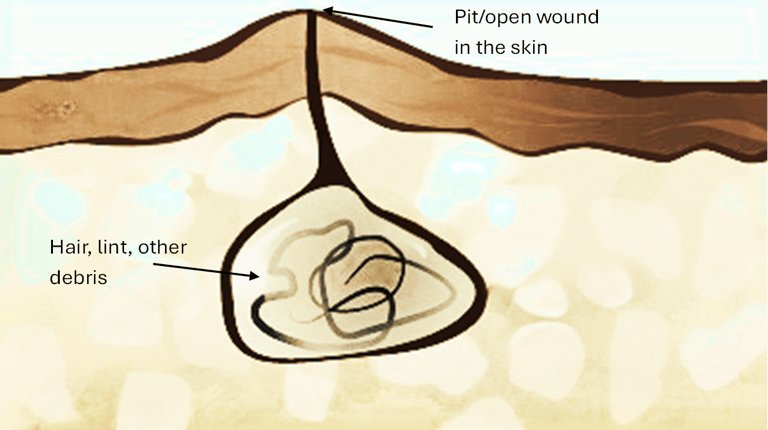
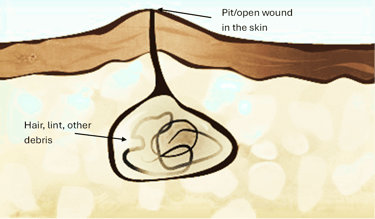
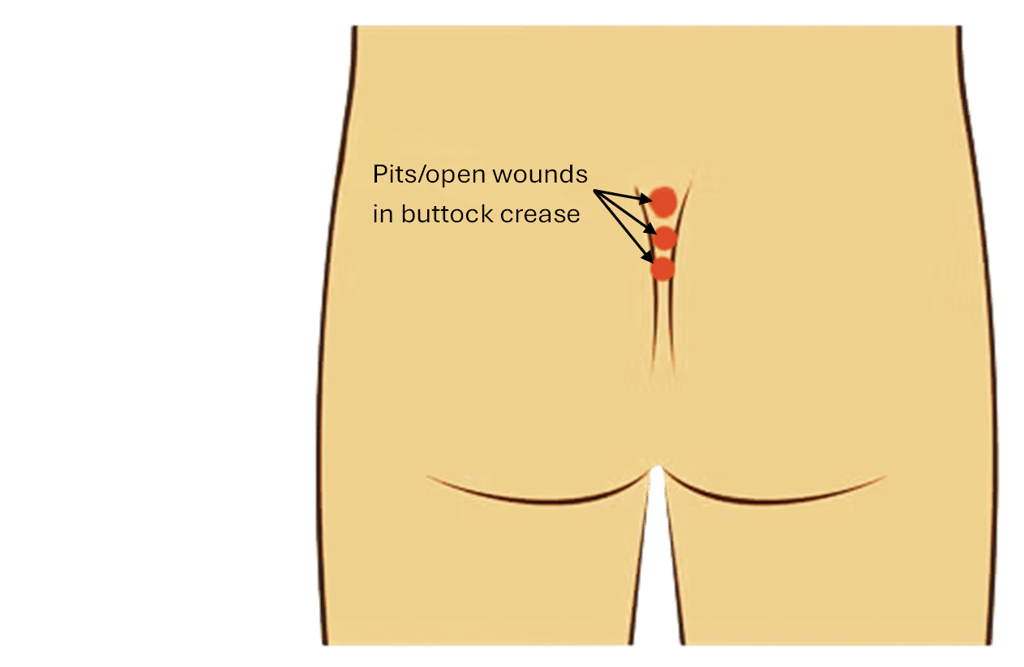
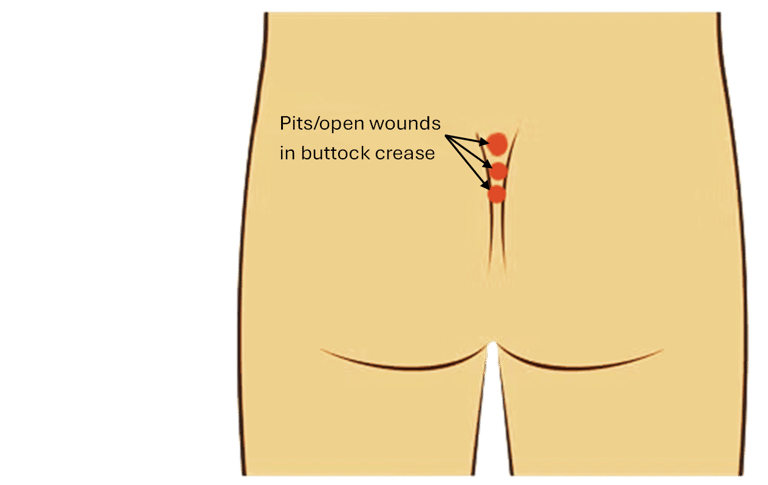
A pilonidal cyst is an inflammatory condition of the buttock crease, where open wounds and tunnels occur.
Pilonidal cysts are due to hair, lint, and other foreign materials getting buried under the skin, and causing foreign body reaction, inflammation and infection
Pilonidal diseases usually causes pain, drainage, and open wounds that may not heal on their own. Sometimes, patients can develop an abscess, which is a collection of pus under the skin.
Symptoms
Symptoms of pilonidal disease can vary:
Pain near the top of the buttock crease
Drainage of blood, pus or other fluid
Abscess (causes severe pain and swelling)
One or more small openings or pits in the skin
A recurring wound that does not fully heal
An unpleasant odor from persistent drainage
Some people have few symptoms between flare-ups, while others experience ongoing drainage or recurrent infections. If you are unsure whether your symptoms are related to pilonidal disease, schedule an evaluation for an accurate assessment.
Evaluation
During the evaluation, Dr. Khansa will review your symptoms, medical history, previous treatments, and pattern of recurrence. He will examine the affected area and discuss whether the findings are consistent with pilonidal disease or another condition.
Your treatment plan may depend on:
Whether an abscess is present
The number and location of skin openings or tunnels
Whether the condition is new or recurrent
The presence of an open or nonhealing wound
Previous procedures and how the area healed
Your overall health, medications, and goals
The goal is to explain your options clearly so you can make an informed decision about next steps.
Treatment
Dr. Khansa will evaluate you and examine you in clinic. He will then formulate a personalized, comprehensive treatment plan for you, including:
✅ Wound care
✅ Surgery: Gips procedure or cleft lift procedure
✅ Long-term prevention of recurrence
Surgery
A Gips procedure is a minimally-invasive surgery performed under general anesthesia. Surgery takes about 1 hour. It is an outpatient surgery where you go home the same day.
In a Gips procedure, Dr. Khansa makes several small openings over the pilonidal sinus. He then uses surgical tools to remove any hair, lint, debris or inflammation that is present inside the pilonidal sinus. Once the sinus is completely clean and clear of any foreign material, Dr. Khansa applied a dressing. The small wounds are left open. They heal on their own over 2-3 weeks.
After a Gips procedure, there are no activity restrictions. You may resume work, sports or other activities that you feel comfortable performing. You have to wash the surgical site in the buttock crease with soap and water in the shower every day.
The Gips procedure is usually the best procedure for most patients with pilonidal disease who have not had prior surgery and recurrence.


1
2
Surgery
A cleft lift procedure is performed under general anesthesia. Surgery takes about 90 minutes. It is an outpatient surgery where you go home the same day.
In a cleft lift surgery, Dr. Khansa excises (removes) the entire pilonidal sinus. He then elevates a flap of skin from one side of the buttock to the other side, and closes the skin in a way that makes the buttock crease less deep. The incisions are closed with sutures (stitches).
After a cleft lift procedure, you should abstain from heavy activity and sports for 6 weeks. You have to wash the surgical site in the buttock crease with soap and water in the shower every day.
The cleft lift procedure is usually the best procedure for patients who have had multiple recurrence of pilonidal disease, despite prior surgical treatment.


1
2
3
4
FAQs
🔎 Is a pilonidal cyst the same as pilonidal disease?
Yes, the terms are often used interchangeably.
🔎 Does every pilonidal cyst require surgery?
No. Treatment depends on the findings, symptoms, recurrence pattern, and overall health. Some patients may be managed with wound care or observation, while others may need treatment for an abscess or surgery.
🔎 What is a pilonidal abscess?
A pilonidal abscess is a collection of infected fluid beneath the skin. It may cause a painful lump, swelling, redness, warmth, drainage, or fever. Prompt medical assessment is needed when these symptoms develop.
🔎 Why does pilonidal disease come back?
Recurrence may be related to persistent skin pits or tunnels, trapped hair and debris, friction, wound-healing problems, or other individual factors. The best prevention plan depends on the cause and the treatment provided.
🔎 Can pilonidal disease heal without treatment?
Some symptoms may temporarily improve, but pilonidal disease does not usually go away permanently without treatment.
🔎 How long does pilonidal cyst surgery recovery take?
Recovery varies based on the procedure, wound-management plan, and individual healing. Dr. Khansa will provide procedure-specific guidance about activity, sitting, work, exercise, and follow-up.
Schedule your pilonidal cyst evaluation in Austin with Dr. Khansa
(512) 615-6566 (call or text)